
Categories
Home SellersPublished March 18, 2026
The #1 Reason Buyers Walk Away, and How You Can Get Ahead of It Before You List


Why do buyers back out of a home purchase, and how can you prevent it before listing?
The most common reason buyers walk away is issues uncovered during the home inspection. By addressing key concerns early, you can reduce risk, build trust, and keep your sale moving forward with confidence.
Why More Buyers Are Backing Out of Deals
You may have seen recent headlines saying more buyers are canceling contracts. While that can sound alarming, the reality is more practical than dramatic.
Today’s buyers simply have more flexibility.
With more homes available, buyers are no longer forced to overlook issues just to secure a property. That shift means they’re paying closer attention to condition, and they’re more willing to walk away if something doesn’t feel right.
The #1 Dealbreaker: Home Inspection Issues
The data makes it clear—inspection-related problems are the leading cause of failed contracts.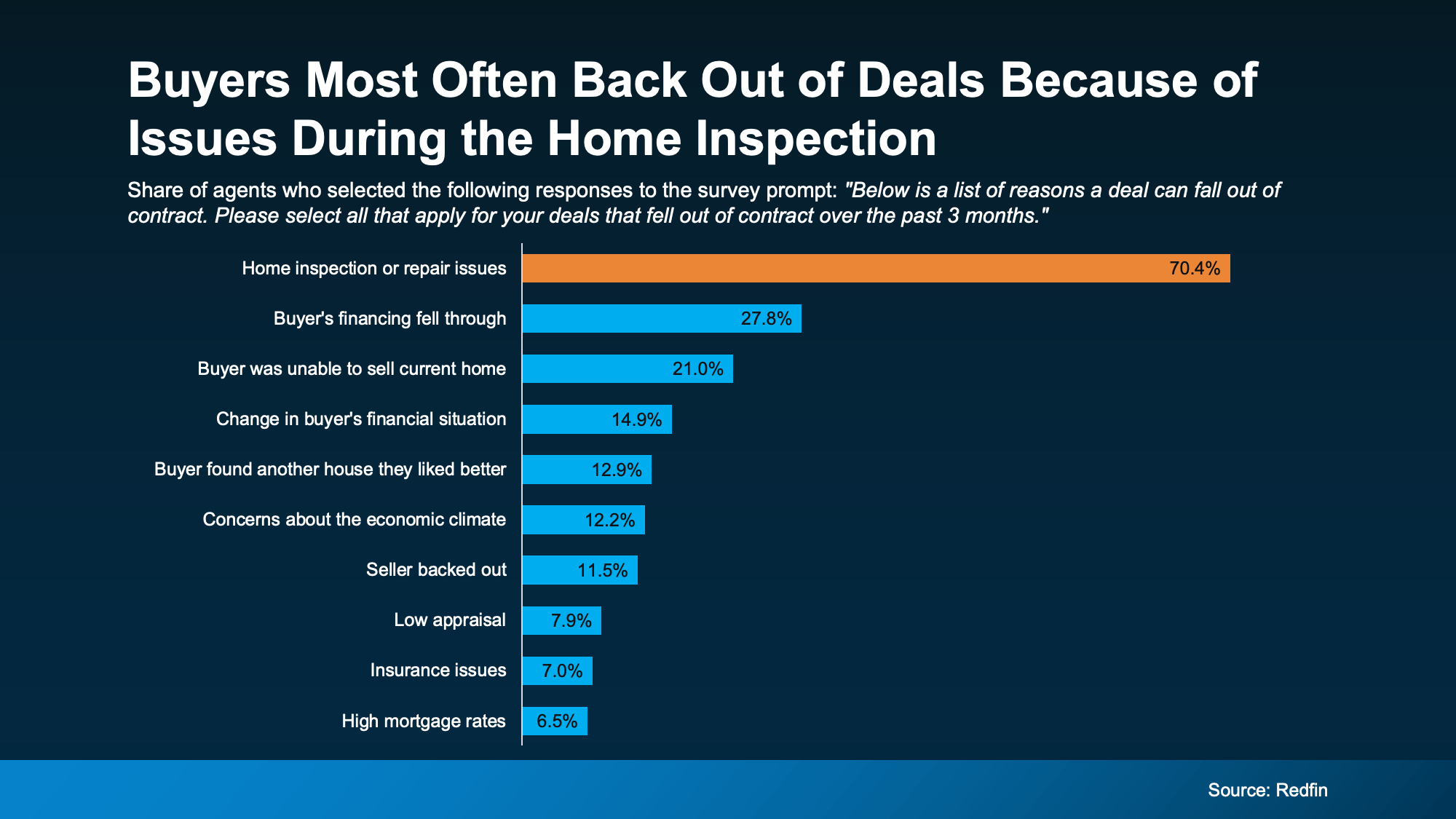 According to a Redfin survey, over 70% of canceled contracts are tied to issues discovered during the home inspection. That’s significantly higher than any other reason.
Other factors, like financing or appraisal issues, still matter, but they don’t come close to the impact of inspection findings.
This tells you something important as a seller: the condition of your home plays a direct role in whether your deal actually closes.
Why Inspection Issues Matter More in Today’s Market
A few years ago, buyers were competing heavily for limited inventory. That environment made them more willing to accept imperfections.
Now, buyers have options.
If your home raises concerns—whether it’s a roof issue, plumbing leak, or something structural—buyers can simply move on to another property that feels like a safer choice.
That doesn’t mean your home has to be perfect. But it does mean that major red flags carry more weight than they used to.
What Buyers Are Looking for During an Inspection
When buyers go through the inspection process, they’re not just looking for cosmetic flaws. They’re focused on potential risks and future costs.
Some of the most common concerns include:
- Roof damage or active leaks
- Plumbing issues or water damage
- Electrical concerns, including outdated wiring
- HVAC systems not working properly
- Pest damage, including termites
- Hazardous materials like mold or asbestos
- Safety or code violations
- Structural concerns, such as foundation cracks
Even one or two of these issues can shift a buyer’s mindset from confident to cautious.
Why Inspection Issues Turn Into Deal Killers
Inspection findings don’t just reveal problems—they introduce uncertainty.
Once a buyer starts asking, “What else might be wrong?”, the tone of the transaction changes. That uncertainty can lead to:
- Renegotiations
- Repair requests
- Delays
- Or the buyer walking away entirely
In many cases, it’s not just the cost of repairs—it’s the lack of clarity that causes hesitation.
How to Get Ahead of Inspection Issues Before You List
The good news is this is one of the most controllable parts of the selling process.
You don’t need to fix everything. You just need to be strategic.
Here’s how to stay ahead:
1. Identify Potential Red Flags Early
Walk through your home with a critical eye. Look for anything that signals deferred maintenance or potential issues.
2. Focus on High-Impact Repairs
Prioritize items that affect safety, structure, or major systems. These are the areas buyers care about most.
3. Don’t Wait Until You’re Under Contract
Trying to fix issues after a buyer finds them puts you under pressure. Getting ahead of it gives you more control and better options.
4. Be Strategic, Not Perfect
Not every issue needs to be fixed. Some may be better handled through pricing or disclosure. The key is knowing the difference.
The Advantage of a Pre-Listing Inspection
One strategy that’s becoming more common is a pre-listing inspection.
This gives you a clear picture of what a buyer’s inspector is likely to find—before you’re negotiating.
With that insight, you can:
- Address issues ahead of time
- Avoid surprises during escrow
- Reduce renegotiation risk
- Build stronger buyer confidence
It’s not the right move for every seller, but in the right situation, it can make a noticeable difference in how smoothly your sale goes.
How The McClung Group Helps You Stay Ahead
Selling a home isn’t just about listing it—it’s about preparing it strategically.
At The McClung Group, we help you identify what actually matters to buyers in today’s market so you can avoid unnecessary stress and protect your deal.
That includes:
- Walking through your home to identify potential dealbreakers
- Advising on which repairs are worth your time and investment
- Helping you decide if a pre-listing inspection makes sense
- Preparing you for what buyers will likely notice
- Creating a strategy that keeps your sale moving forward
When you approach the process proactively, you’re not reacting to problems—you’re preventing them.
Selling in The Woodlands? Preparation Matters More Than Ever
In The Woodlands, buyers are paying attention not just to presentation, but to condition.
A home that shows well online but raises concerns during inspection can still lose momentum quickly. That’s why preparation before listing is just as important as pricing and marketing.
When you take the right steps early, you position your home to stand out for the right reasons.
Final Takeaway
Inspection issues are the number one reason buyers walk away—but they’re also one of the most preventable.
When you understand what buyers are looking for and take care of the right items before listing, you reduce uncertainty, build trust, and improve your chances of getting to the closing table smoothly.
Call to Action
If you’re thinking about selling and want to know what buyers are most likely to notice before you list, connect with The McClung Group. We’ll help you focus on the right areas so you can avoid surprises and move forward with confidence.

Tiffany McClung
Realtor and Team Leader | The McClung Group | Keller Williams The Woodlands & Magnolia
or another way