
Categories
Home Sellers, The Woodlands homes for salePublished March 11, 2026
If Your House Isn’t Getting Offers, Read This


Why isn’t your house getting offers, and what can you do to fix it?
If your home has been sitting on the market without serious interest, it doesn’t automatically mean something is wrong with your house. More often, the market is giving you feedback—and once you understand that feedback, you can adjust and regain momentum.
More Sellers Are Asking the Same Question
Across the country, more homeowners are wondering the same thing: Why isn’t my house selling?
The data backs it up. Searches for “can’t sell house” have recently reached their highest level ever according to Google Trends.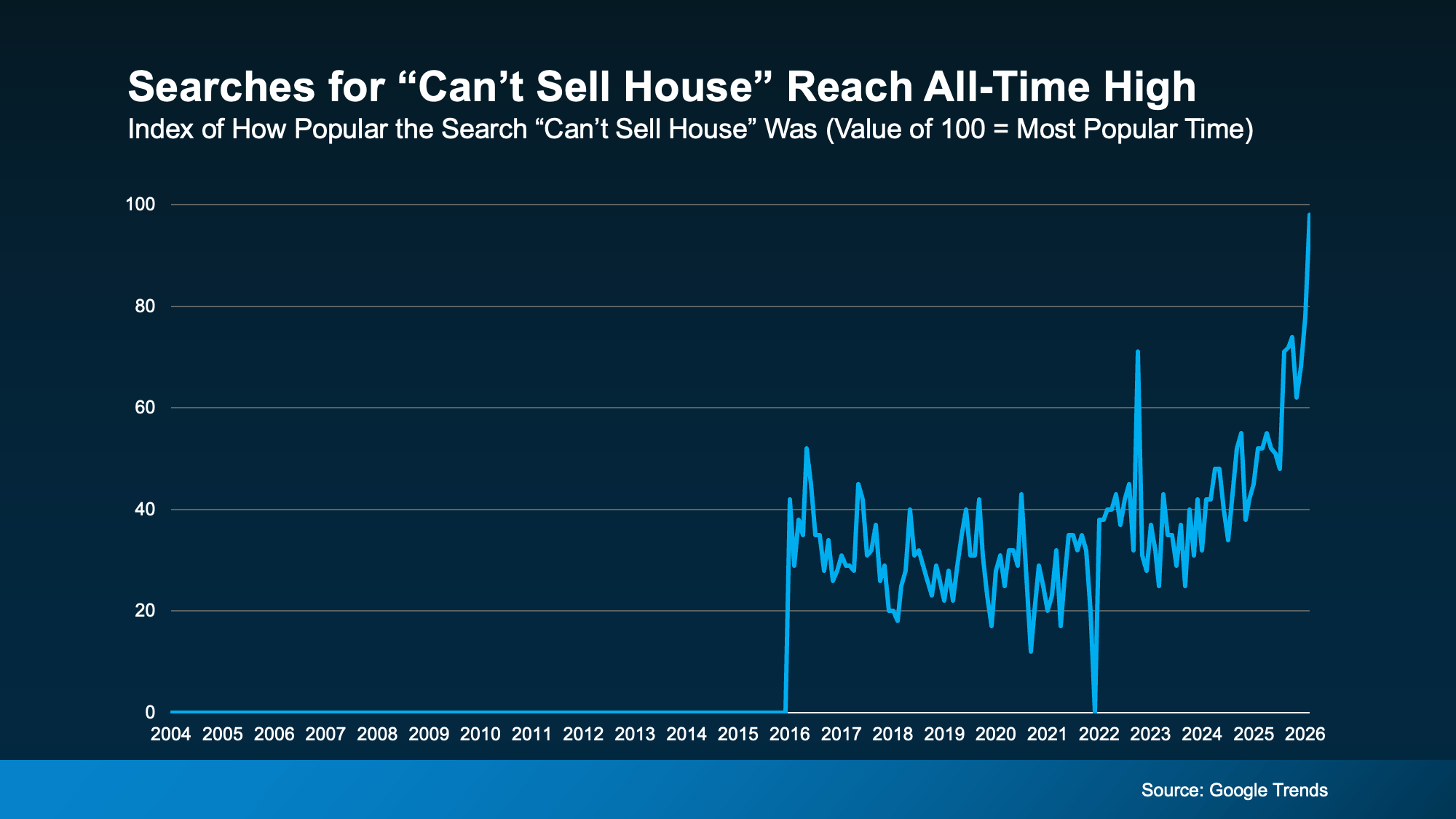 This chart doesn’t mean homes aren’t selling. Homes are still closing every day.
What it shows is something psychological: more sellers are feeling uncertain when their listings sit longer than expected.
And that uncertainty often sends people searching online for answers.
But here’s the catch.
A search engine can’t evaluate your specific home, your local market, or your competition.
Your agent can.
A Search Engine Can’t Diagnose Your Listing
General advice online can be helpful at a surface level, but it can’t tell you exactly why your home isn’t moving.
Only an experienced agent can look at your listing, buyer activity, showing feedback, nearby competition, and current market behavior to figure out what’s actually holding you back.
In today’s market, homes that struggle to sell are usually being slowed down by one of three things:
- Presentation
- Pricing
- Access
Sometimes it’s just one issue. Often, it’s a combination.
Understanding which one applies to your home is the key to fixing the problem.
1. Presentation: Buyers Are Comparing Everything
A few years ago, when inventory was extremely tight, buyers overlooked a lot. Cosmetic flaws, outdated finishes, or minor repairs didn’t stop offers because buyers had limited options.
Today’s buyers operate differently.
They can compare dozens of homes online in minutes. They’re looking at photos, finishes, condition, lighting, layout, and updates side by side.
If your home looks cluttered, dated, dark, or unfinished, buyers notice immediately—and many simply move on.
This doesn’t mean you need a full renovation.
But it does mean first impressions matter again.
A few small improvements can dramatically change how buyers perceive your home:
- Deep cleaning the entire house
- Decluttering furniture and personal items
- Touch-up paint in neutral colors
- Improving curb appeal
- Updating light fixtures
- Professional listing photography
The goal isn’t perfection. The goal is being competitive with other homes at your price point.
2. Pricing: If the Price Isn’t Compelling, It’s Not Selling
Pricing is often the most difficult conversation for sellers—but it’s also one of the most important.
What your neighbor’s home sold for a few years ago doesn’t necessarily reflect today’s market conditions.
Buyers are more budget-conscious now. They’re comparing value more carefully, and many are slower to act.
If your home is priced above where buyers see value, you may still get online views or occasional showings—but offers won’t follow.
Sometimes the warning signs look like this:
- Strong online traffic but few showings
- Showings with no offers
- Repeated feedback about price
- Nearby homes selling while yours sits
- Offers coming in lower than expected
That silence from buyers is often a signal that the market sees the value differently than the seller hoped.
Pricing isn’t about defending a number—it’s about positioning your home so buyers feel compelled to act.
3. Access: If Buyers Can’t See It, They Can’t Buy It
This one sounds simple, but it can quietly reduce buyer interest.
If your home is difficult to schedule, many buyers will simply move on to the next listing.
That can happen when:
- Showings are limited to certain hours
- Weekend access is restricted
- Long notice is required
- Certain days are unavailable
Every extra barrier reduces the number of potential buyers who walk through your door.
The easier it is for buyers to see the home, the easier it is for offers to happen.
Don’t Let Search Results Decide Your Next Step
When your listing feels stuck, it’s easy to spiral and start wondering whether something is wrong with your house.
But instead of relying on search results, the best move is a direct conversation with your agent.
Ask three honest questions:
- What are buyers looking for right now?
- What feedback are we getting from showings?
- Why do you think my house hasn’t sold yet?
Those answers will give you far more clarity than anything a search engine can provide.
Bottom Line
If your house isn’t getting offers, it doesn’t mean you shouldn’t sell. It means the market is giving you feedback.
And feedback is useful when you act on it.
The sellers who adapt—by improving presentation, adjusting price, or increasing showing access—are usually the ones who regain momentum.
Schedule a Consultation About Your Home
If your house has been sitting on the market without offers, the worst thing you can do is guess what’s wrong. The right move is to look at the data, the competition, and the buyer feedback together.
That’s exactly what we help homeowners do.
At The McClung Group, we work with sellers across The Woodlands to evaluate what’s happening with their listing and identify the specific adjustments that can help generate momentum again.
Sometimes it’s pricing.
Sometimes it’s presentation.
Sometimes it’s simply positioning the home better against competing listings.
But once you understand what buyers are responding to, you can make smart decisions that move your sale forward.
If you’d like a professional review of your listing strategy and what today’s buyers are actually seeing, schedule a consultation with The McClung Group. We’ll walk through your situation and help you determine the next best step.

Tiffany McClung
Realtor and Team Leader | The McClung Group | Keller Williams The Woodlands & Magnolia
or another way