
Categories
Home Buyers, Home Sellers, The Woodlands homes for salePublished February 16, 2026
Housing Inventory 2026: Why the Market Is Finally Shifting Back Toward Balance


Is housing inventory in 2026 finally returning to normal levels?
Yes—housing inventory in 2026 is rising steadily, and if current projections hold, we could see supply levels approach pre-pandemic norms by the end of the year.
Housing Inventory 2026: A Clear Rebound from Historic Lows
For years, the biggest challenge in real estate wasn’t interest rates. It wasn’t pricing strategy. It was supply.
There simply weren’t enough homes for sale.
After 2020, inventory dropped sharply. Buyers were competing for fewer properties, timelines were compressed, and negotiations often felt one-sided. The market leaned heavily toward sellers.
But housing inventory in 2026 tells a different story.
According to Realtor.com, the number of active listings in January 2026 reached 912,696 homes—the highest January level since 2020.
Here’s how that compares historically: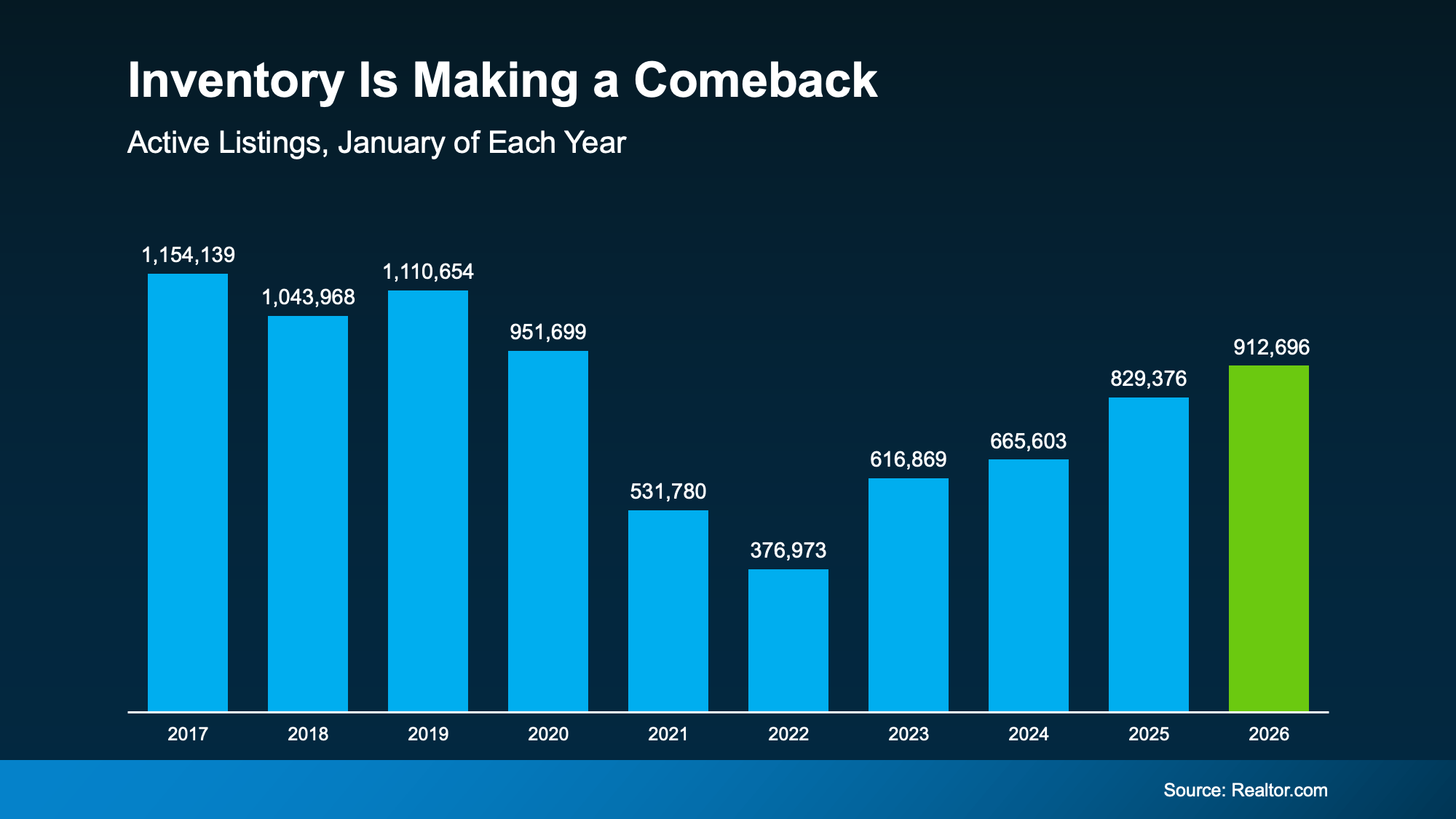
- 2017–2019: Balanced, typical inventory levels
- 2020–2022: A steep drop, hitting historic lows
- 2023–2026: A steady climb back
We are not fully back to 2017–2019 numbers yet. But the direction matters more than the exact number.
Momentum has shifted.
Why Housing Inventory 2026 Feels Different
Inventory levels don’t just impact statistics—they shape the entire buying experience.
When supply is low:
- Buyers rush decisions
- Multiple offers are common
- Negotiating power is limited
When inventory rises:
- You gain time
- You gain options
- You gain leverage
Housing inventory in 2026 is creating breathing room that simply didn’t exist two or three years ago.
That doesn’t mean it’s suddenly a “buyer’s market” everywhere. Real estate is local. Some areas are recovering faster than others. But nationally, the market is gradually rebalancing.
Hannah Jones, Senior Economic Research Analyst at Realtor.com, put it this way: housing conditions are “gradually rebalancing after several years of extreme seller advantage.”
That word—rebalancing—is key.
More Metro Areas Are Returning to Normal
This shift isn’t isolated.
According to Lance Lambert, Co-Founder of ResiClub:
- In January 2025, only 41 of the 200 largest metro areas were back to normal inventory levels.
- By the end of the year, that number jumped to 90 metros.
That’s more than doubling in roughly one year.
Housing inventory 2026 isn’t just rising—it’s spreading geographically. More markets are stabilizing. More buyers are experiencing normal seasonal patterns again.
That trend is expected to continue.
What Happens If Inventory Grows Another 10% in 2026?
Forecasts suggest housing inventory in 2026 could rise another 10%.
If that happens, we could approach 2017–2019 levels nationally by fall.
Here’s what that projection looks like: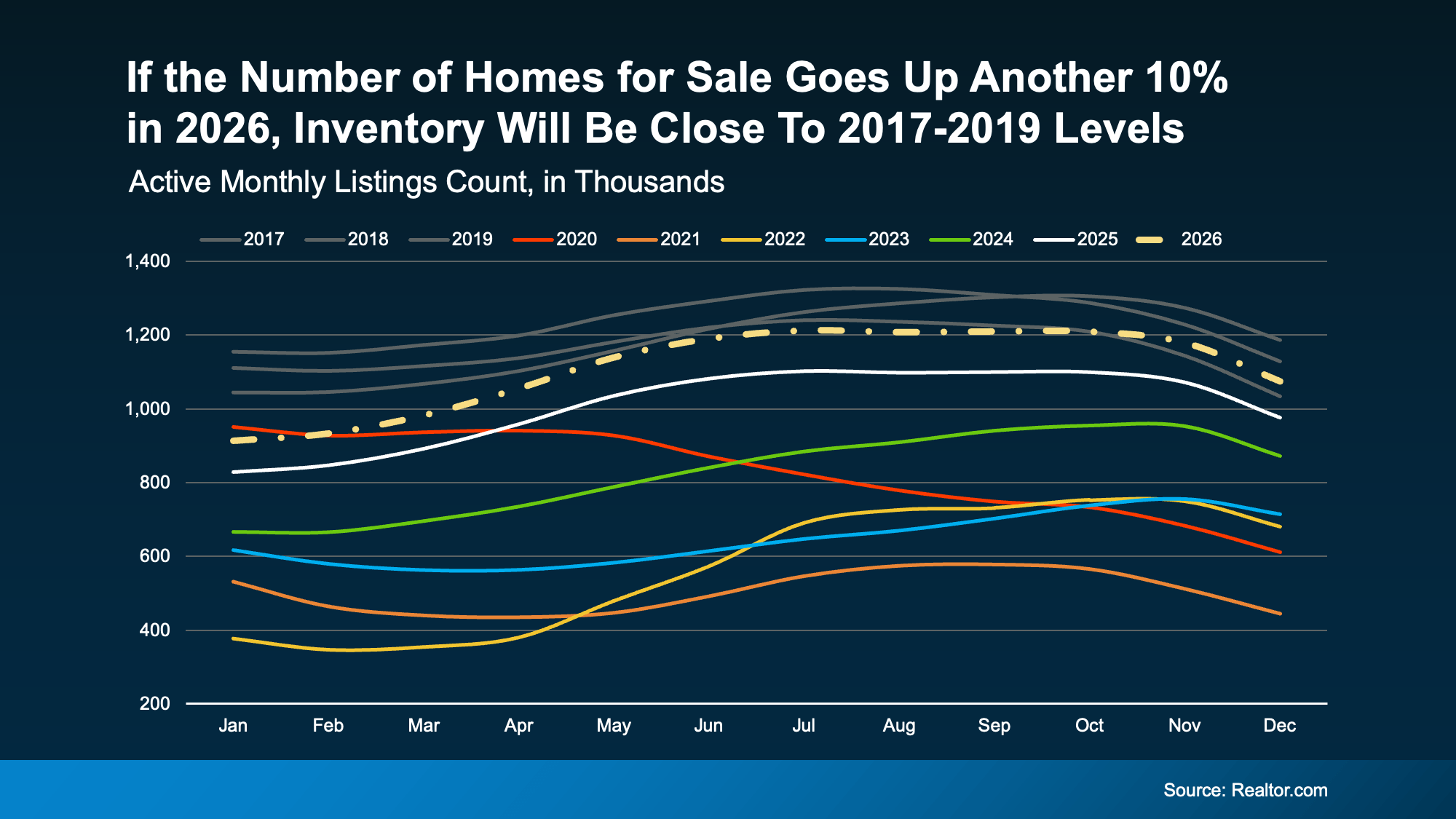
Notice how it begins tracking close to the gray lines representing pre-pandemic norms.
That’s significant.
Because 2017–2019 wasn’t an overheated market.
It wasn’t a distressed market.
It was balanced.
And balance is healthy.
What Housing Inventory 2026 Means for Buyers
If you’ve been waiting for conditions to improve, this is the strongest setup buyers have seen in years.
Here’s how it changes your strategy:
1. More Choice
You’re not limited to whatever hits the market this week. You can compare properties more thoughtfully.
2. More Negotiating Power
Increased supply means sellers face more competition. That can open doors for:
- Price negotiations
- Repair requests
- Closing cost conversations
3. Less Emotional Pressure
You don’t have to make a six-figure decision in 24 hours.
That alone changes everything.
If you’re buying in The Woodlands, this national shift matters—but local data matters more. Inventory recovery is happening at different speeds depending on price point and neighborhood.
That’s why working with experienced Realtors in The Woodlands, like The McClung Group, helps you interpret what’s actually happening on the ground—not just what headlines say.
What Housing Inventory 2026 Means for Sellers
Rising inventory doesn’t mean panic.
It means strategy matters more.
When there are fewer listings, almost any well-presented home gets attention. When supply grows, pricing and marketing precision become critical.
In today’s environment, sellers should focus on:
- Accurate pricing from day one
- Strong photography and presentation
- Clear differentiation from competing homes
Housing inventory 2026 rewards preparation.
If you’re thinking about selling in The Woodlands, understanding how your specific neighborhood compares to national trends is essential. Some segments are near normal. Others remain tight.
The nuance matters.
We’re Not Fully “Back”—But We’re Closer
Nationally, inventory is still below 2017–2019 levels. The gap hasn’t fully closed.
But the trajectory is clear:
- Inventory bottomed in 2022
- It has increased each year since
- Another 10% growth could push us near normal by year-end
Housing inventory 2026 represents progress.
Not perfection. Progress.
And markets rarely flip overnight. They evolve gradually. That’s exactly what we’re seeing.
What This Means for You in The Woodlands
If you’re in The Woodlands, the most important question isn’t:
“What’s happening nationally?”
It’s:
“What’s happening in my price range, in my neighborhood, right now?”
That’s where local expertise makes the difference.
At The McClung Group, we track hyper-local data daily. We analyze how inventory levels compare year-over-year, how quickly homes are moving, and where negotiating leverage exists.
Because housing inventory 2026 may look balanced nationally—but your specific segment could be tighter or looser.
Understanding that difference shapes your strategy.
Final Takeaway
Housing inventory in 2026 is making a measurable comeback.
We’re seeing the highest January levels since 2020. More metro areas are returning to normal. And if projections hold, supply could be close to 2017–2019 levels by the end of the year.
That creates opportunity.
More options.
More breathing room.
More balance.
The market isn’t “fixed.” It’s stabilizing.
And that shift matters.
Want to Know What Inventory Looks Like in Your Neighborhood?
If you’re buying or selling in The Woodlands, schedule a call with The McClung Group.
We’ll walk through:
- Current inventory in your price range
- How quickly homes are selling
- Where negotiating power exists
- Whether timing works in your favor
Housing inventory 2026 is changing the conversation.
Now is a smart time to understand exactly where you stand.

Tiffany McClung
Realtor and Team Leader | The McClung Group | Keller Williams The Woodlands & Magnolia
or another way