
Categories
Home BuyersPublished February 4, 2026
Home Insurance Costs Are Rising: What Buyers Should Plan For


Are home insurance costs going up, and how should you plan for them when buying a home?
Home insurance premiums have been rising nationwide, but the pace of those increases is beginning to slow. That means buyers still need to plan carefully, but the outlook isn’t as daunting as it was just a year ago.
Why Home Insurance Matters More Than Ever
Buying a home is one of the largest financial commitments you’ll ever make. Homeowner’s insurance is what protects that investment when the unexpected happens.
At its core, a standard policy helps cover:
- Repairs or rebuilding if your home is damaged by covered events like storms or fire
- Personal belongings such as furniture, electronics, and clothing
- Liability costs if someone is injured on your property
That peace of mind is essential, but it comes with a growing price tag.
Why Home Insurance Premiums Are Increasing
Insurance costs are rising for a few key reasons that are shaping today’s market.
Severe weather events are happening more frequently, which means insurers are paying out more claims. At the same time, construction materials and labor have become more expensive. When it costs more to repair or rebuild a home, insurance premiums follow.
The chart below shows how insurance premiums have changed year over year.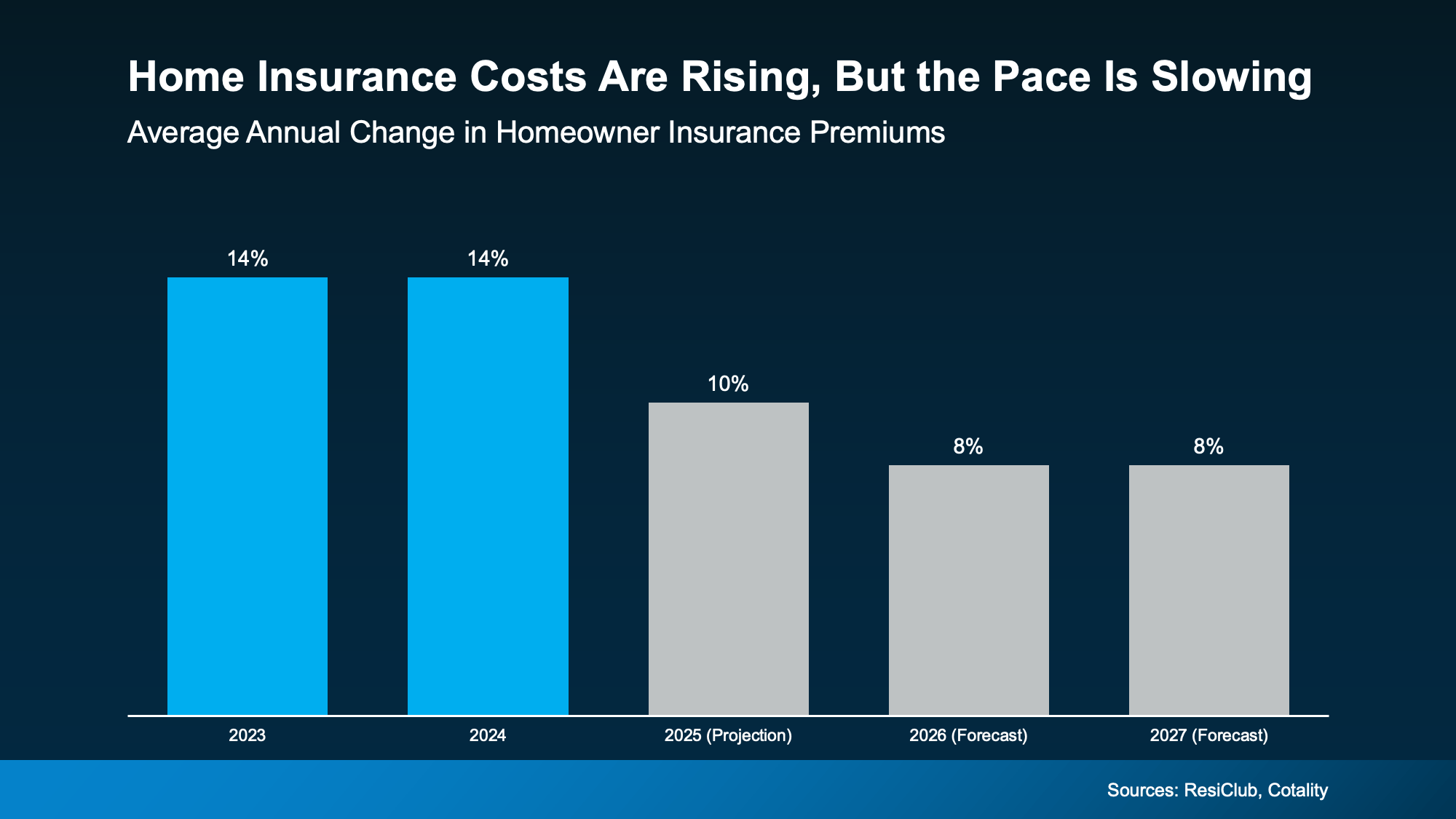
In recent years:
- Premiums increased about 14% in both 2023 and 2024
- The increase slowed to roughly 10% in 2025
- Forecasts suggest increases of around 8% in 2026 and 2027
Costs are still rising, but the acceleration is easing. That shift gives buyers more predictability when planning their budgets.
Rising Insurance Costs vs. Falling Mortgage Rates
There’s an important counterbalance happening at the same time. While insurance premiums have climbed, mortgage rates have come down from their recent highs.
Lower rates can help offset some of the added monthly cost from insurance and taxes. The key isn’t expecting one factor to cancel out another, but understanding how the pieces work together so you can structure a payment that fits your comfort level.
Insurance Costs Vary Widely by Location
Where you buy matters. Insurance premiums vary significantly from state to state due to weather risk, rebuilding costs, and regional claim trends.
The map below provides a snapshot of average annual home insurance premiums by state.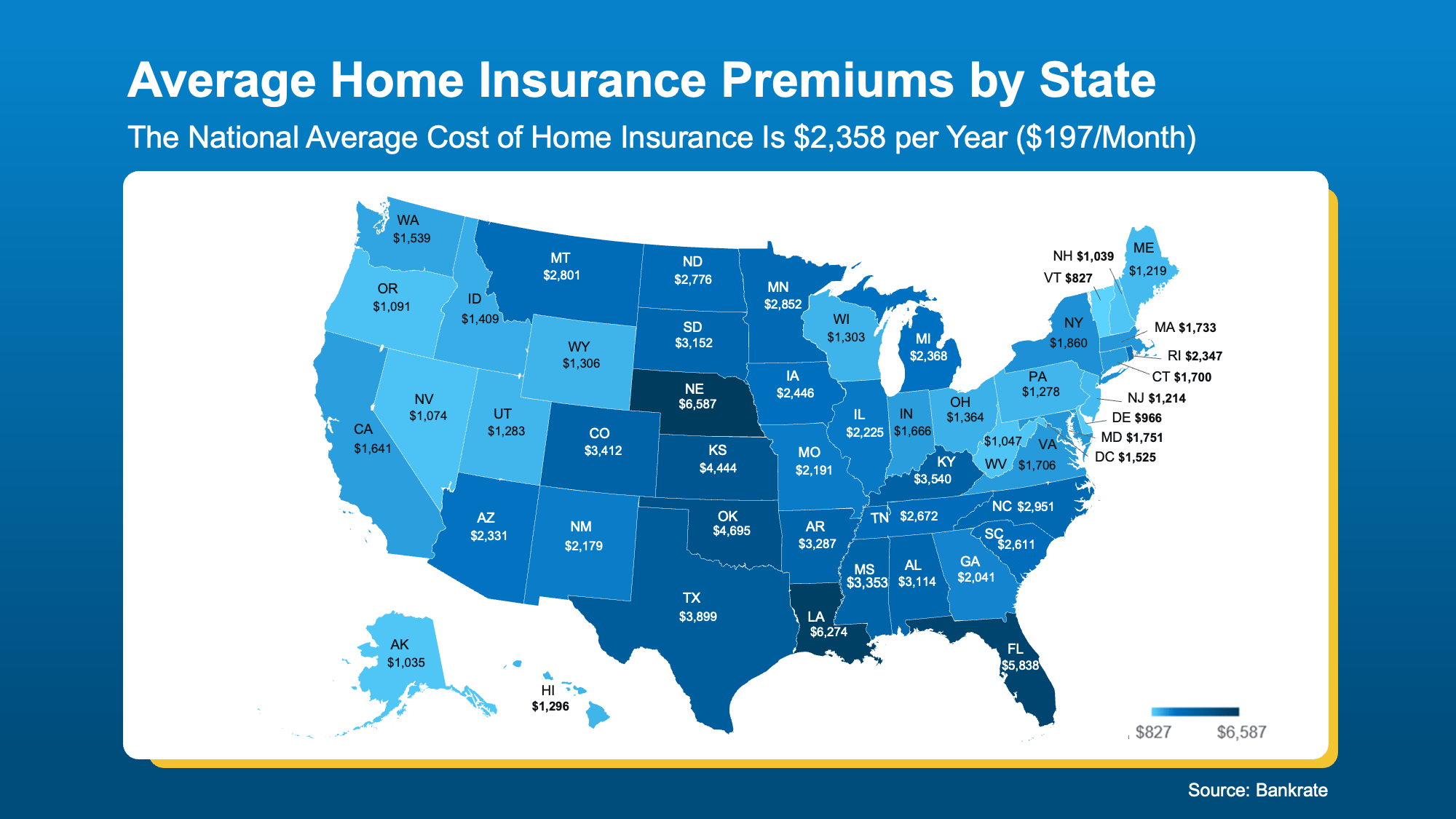
The national average sits around $2,358 per year, but some states fall well below that, while others come in substantially higher. This is why online averages only tell part of the story. Your actual cost will depend on location, home features, coverage levels, and deductibles.
What Buyers Can Do to Manage Insurance Costs
Insurance is usually collected upfront as part of your closing costs and then becomes an ongoing expense. Planning for it early helps avoid surprises.
A few practical strategies can help keep premiums in check:
- Compare quotes from multiple insurance providers
- Bundle home and auto policies when possible
- Ask about available discounts you may qualify for
- Make sure upgrades like a newer roof or storm-resistant features are documented
- Maintain strong credit, which can influence pricing
These steps won’t eliminate rising costs, but they can make a meaningful difference.
Final Takeaway
Home insurance costs are rising, but the pace is slowing, and that’s an important distinction for today’s buyers. With realistic expectations, smart budgeting, and the right guidance, insurance doesn’t have to be a deal-breaker.
Understanding these costs upfront puts you in a stronger position to buy confidently and protect what may be your biggest investment.
Call to Action
If you’re thinking about buying a home and want help understanding how insurance, mortgage rates, and overall costs fit together, connect with The McClung Group. As Realtors serving The Woodlands, we help buyers plan smartly, avoid surprises, and move forward with clarity.
Reach out to schedule a conversation and get a clear picture of what homeownership looks like for you.

Tiffany McClung
Realtor and Team Leader | The McClung Group | Keller Williams The Woodlands & Magnolia
or another way