
Categories
Home Buyers, Home SellersPublished August 27, 2026
Worried About a Housing Crash? The Numbers Tell a Calmer Story


Worried About a Housing Crash? The Numbers Tell a Calmer Story
Are we heading toward a housing market crash in 2026?
The numbers tell a much calmer story. Home prices have leveled out, housing inventory has steadied, and mortgage rates have remained within a relatively consistent range—three signs that today’s housing market is showing more stability than the headlines may suggest.
A recent Talker Research survey asked Americans to choose one word to describe how 2026 has felt so far. The most common answer was stressful.
With so much uncertainty, you may be wondering whether it makes sense to put your plans to buy or sell a home on hold until things feel more predictable.
But when you look specifically at the housing market, the picture is more stable than you might expect.
Home Prices Have Leveled Out
After years of rapid price increases, home prices have settled into a much steadier pattern.
Data from the National Association of Realtors (NAR) shows that home prices have been remarkably steady over the past four years.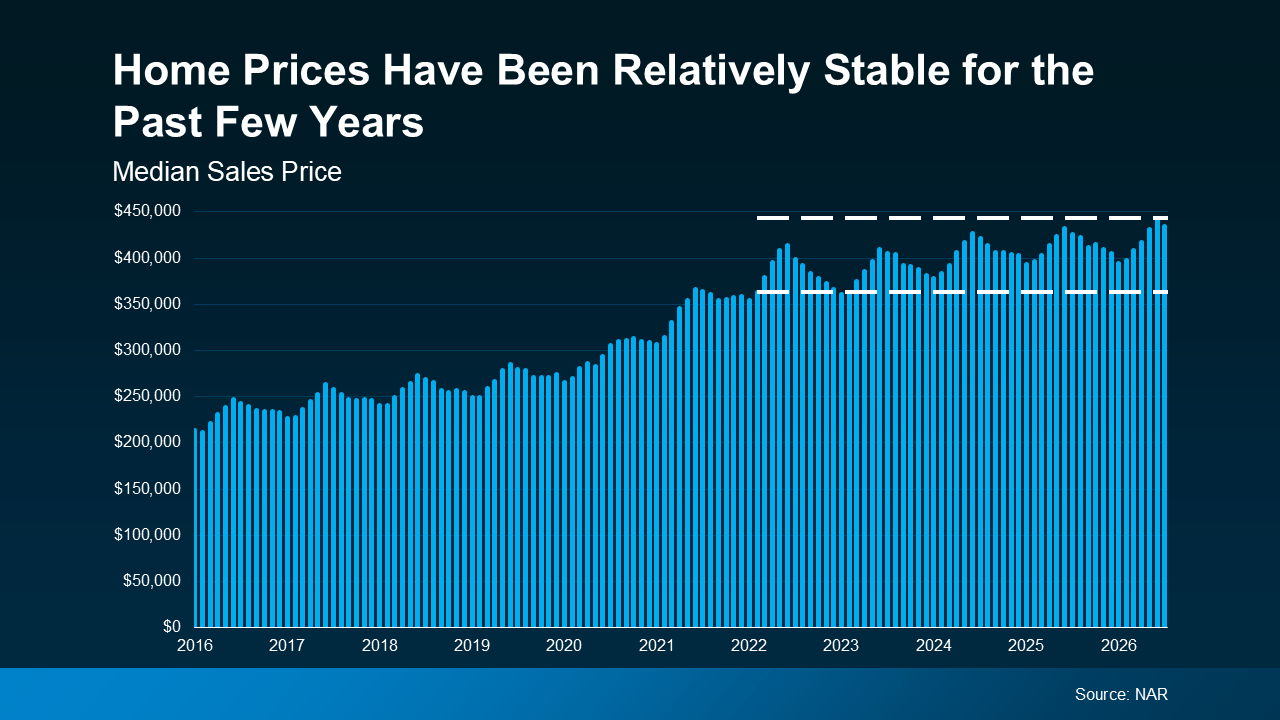
That matters because a housing crash typically brings to mind steep and widespread declines in home values. The recent national data doesn't show that type of movement. Instead, prices have been moving at a much more measured pace.
Selma Hepp, Chief Economist at Cotality, explains:
“In 2026, we expect home prices to remain broadly stable, with modest appreciation at a national level.”
That doesn't mean every housing market will perform exactly the same way. Real estate conditions can vary significantly from one city, neighborhood, and price range to another.
Nationally, however, slower and steadier price movement can give both buyers and sellers a more predictable environment in which to make decisions.
For buyers, that may make it easier to establish a realistic budget without feeling as though prices are rapidly moving away from you.
For sellers, it means pricing your home appropriately for current conditions becomes especially important. When prices aren't rising dramatically, buyers may be less willing to chase an overpriced property.
The Supply of Homes for Sale Has Steadied
Inventory is another important piece of the housing market crash conversation.
During the pandemic, the number of homes available for sale dropped sharply. Since then, inventory has gradually been rebuilding.
Now, according to Realtor.com data, the number of homes available for sale is very close to where it was at the same point last year.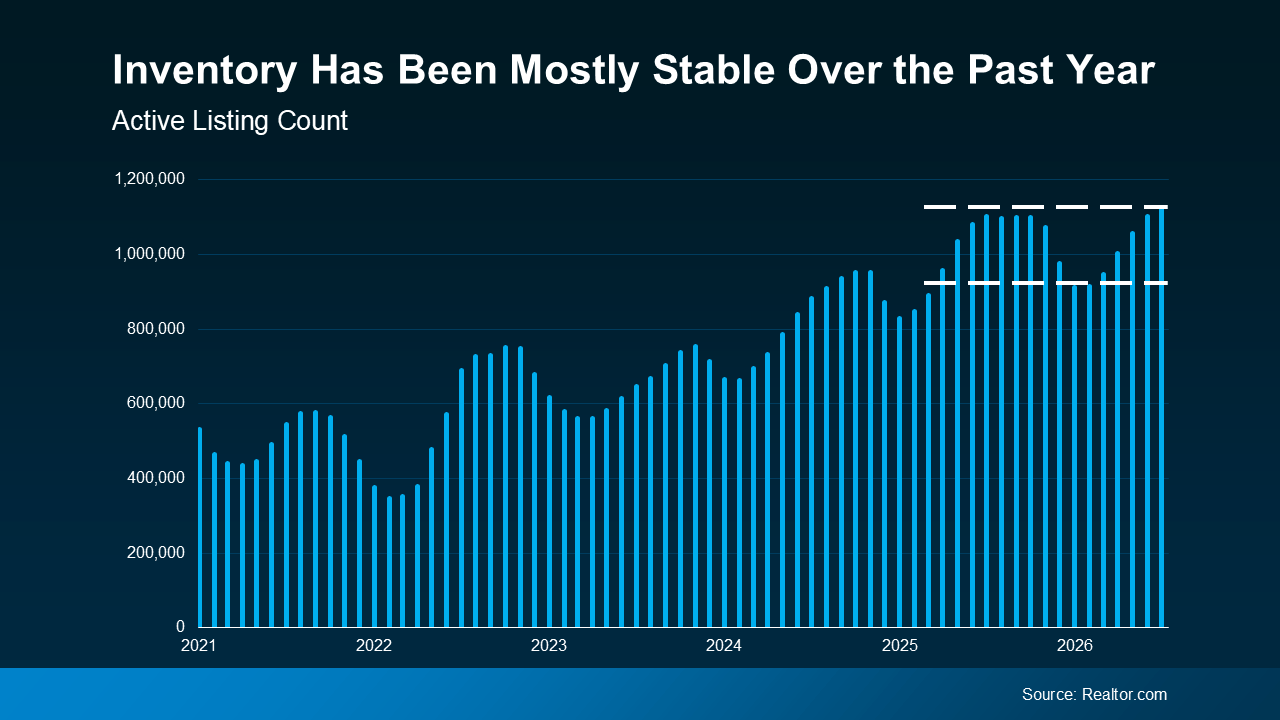
In other words, the rapid changes in housing supply have started to settle down.
That's helpful whether you're planning to buy or sell.
If you're buying, a steadier supply of homes gives you a clearer sense of how much inventory you may have to choose from.
If you're selling, it can make it easier to understand how much competition your property is likely to face.
Inventory is also one of the reasons it's important not to make a real estate decision based solely on national headlines. The number of available homes can look very different from one local market to another.
Understanding what's happening where you actually plan to buy or sell is what helps turn national housing trends into a practical strategy.
Mortgage Rates Have Found a Range
Mortgage rates have been another major source of uncertainty for homebuyers.
Rates increased dramatically in 2022, changing affordability almost overnight for many buyers. But the years since then have looked considerably different.
Freddie Mac data shows mortgage rates have generally remained between 6% and 7% for the better part of the past three years, aside from a brief move above that range.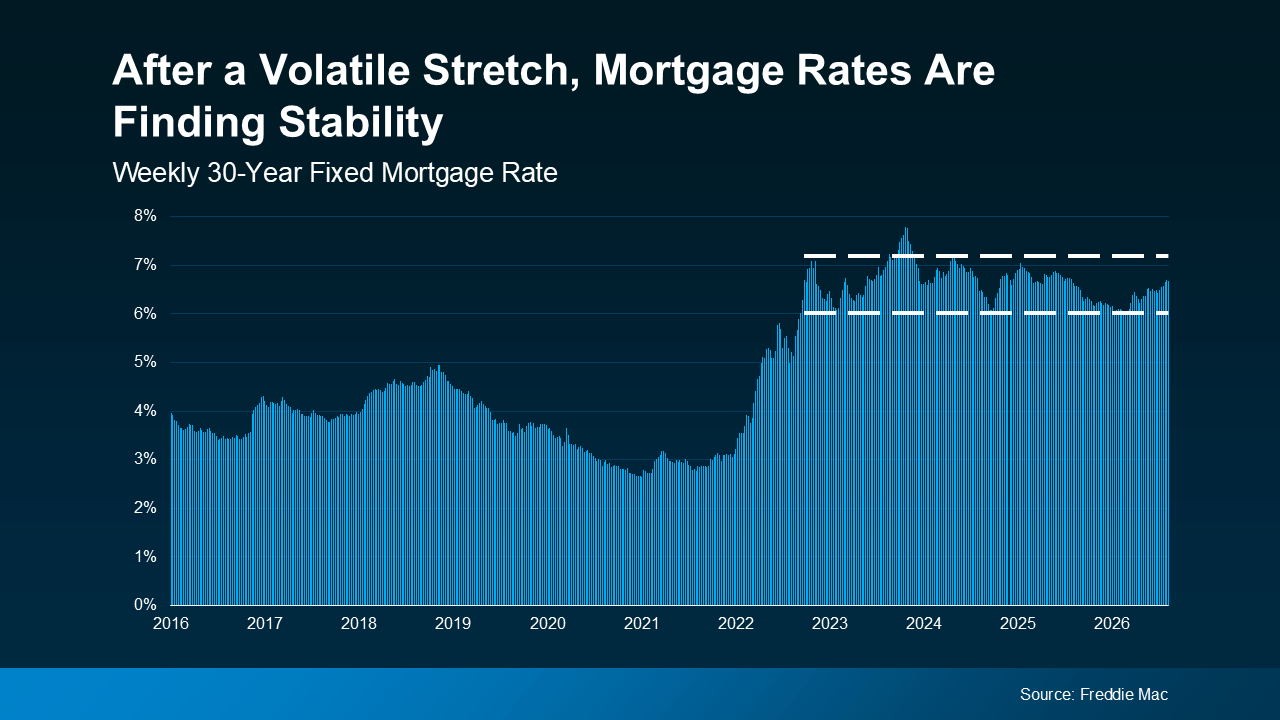
That doesn't mean rates are low compared with the ultra-low mortgage rates buyers saw several years ago.
What has changed is their predictability.
After spending an extended period in a similar range, buyers and sellers have had more time to adjust their expectations.
Buyers can evaluate homes and monthly payments based on the rate environment they're actually experiencing rather than planning around the possibility of an immediate dramatic decline.
Sellers are also adapting to a market where buyers are making purchasing decisions under today's financing conditions.
That adjustment matters because housing activity doesn't necessarily need dramatically lower rates to continue. When buyers and sellers have a clearer idea of what to expect, they can make decisions based on their individual circumstances rather than waiting indefinitely for the market to change.
So, Is a Housing Crash Coming?
No one can guarantee exactly what the housing market will do next. Conditions can change, and national trends don't determine what will happen in every individual market.
But if you're worried that current conditions are pointing toward an imminent housing crash, the data presented here tells a more stable story.
Three major parts of the housing market have become considerably steadier:
- Home prices: After years of rapid appreciation, national prices have leveled out and are expected to see modest appreciation.
- Housing inventory: The supply of homes for sale is now close to where it was at the same time last year.
- Mortgage rates: After the sharp increase in 2022, rates have spent much of the past several years within a more consistent range.
Taken together, those trends look much more like a housing market adjusting to a new normal than one experiencing dramatic instability.
What This Means if You're Thinking About Buying
If you've delayed buying because you're waiting for a major housing crash, it's worth reconsidering what the current data actually shows.
Waiting for prices, rates, and inventory to reach a perfect combination can make it difficult to decide when to move forward.
Instead, your decision should come back to factors you can evaluate today: your budget, financing options, housing needs, timeline, and what's happening in the specific market where you want to purchase.
National housing data provides useful context. Your personal circumstances and local market determine whether buying makes sense for you.
What This Means if You're Thinking About Selling
For sellers, a steadier market doesn't mean every home will automatically sell quickly or at any asking price.
When buyers have more time to evaluate their options, your pricing, presentation, marketing, and overall strategy matter.
The national market may be relatively stable, but real estate remains highly local. Understanding recent comparable sales, available inventory, buyer activity, and competition in your particular area can help you position your home appropriately from the beginning.
The Bottom Line
The broader world may feel unpredictable in 2026, but the housing market is telling a calmer story.
Home prices have leveled out. Housing inventory has steadied. Mortgage rates have spent years within a relatively consistent range.
If you've been waiting for greater stability before buying or selling a home, some of the stability you've been waiting for may already be here.
The next question isn't simply whether the national housing market is going up or down. It's what today's market means for your specific move.
Ready To Talk About Your Next Move?
If you're considering buying or selling and want to understand how today's housing market affects your options, The McClung Group can help you look beyond national headlines to the conditions that matter for your move.
As Realtors serving The Woodlands, we can help you evaluate the local market, understand your options, and build a strategy based on your goals and timeline.
Contact The McClung Group today to start the conversation.

Tiffany McClung
Realtor and Team Leader | The McClung Group | Keller Williams The Woodlands & Magnolia
or another way